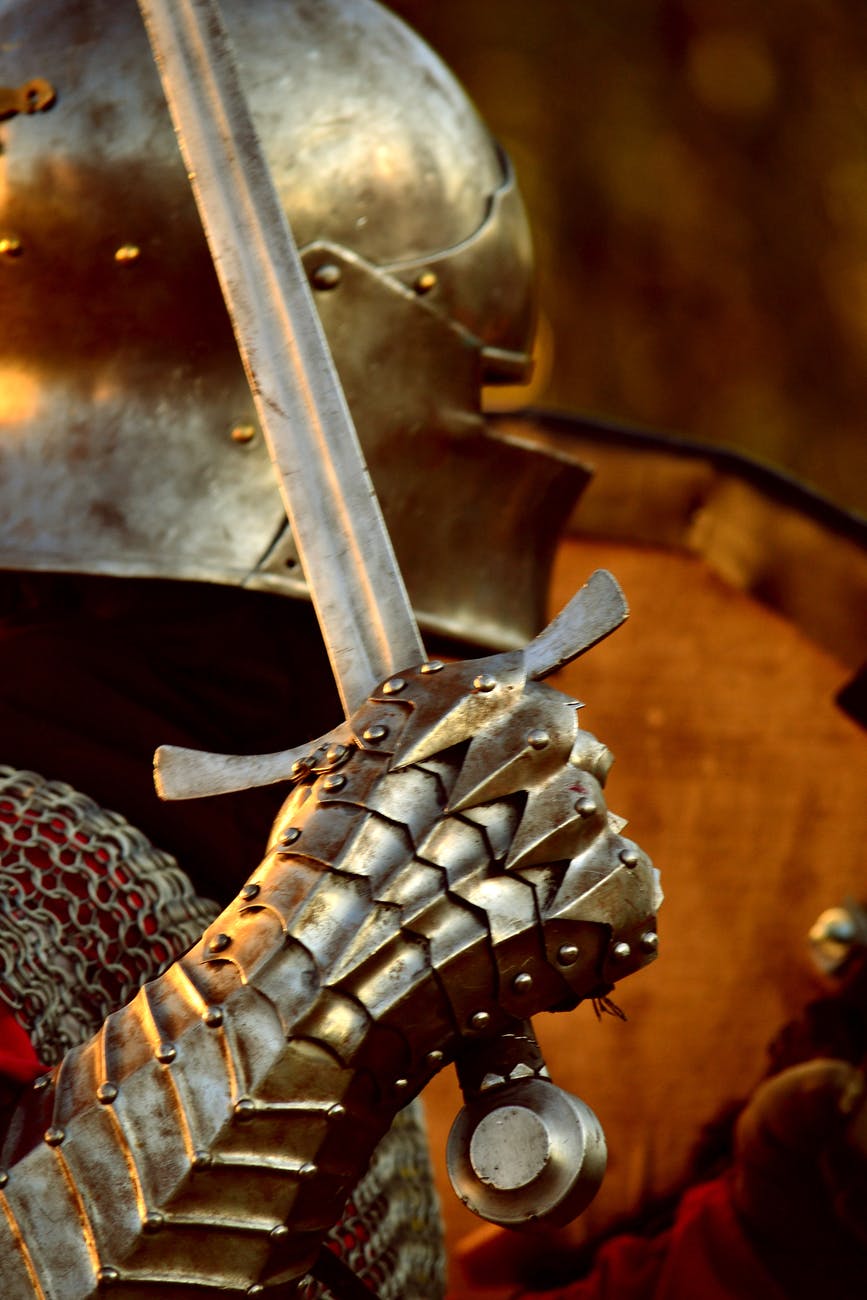
Sir Lancelot is without a doubt one of the most enduring characters in Arthuriana.
Lancelot is the pinnacle of knight-hood, being a shining example of chivalry, strength and honor. In the process of making him so perfect, various writers accidentally gave him some interesting or just plain BAD traits in the process. What is the point of Lancelot to the Arthurian legend? Why is he so important and why does his character continue to fascinate us? Let’s take a look at why Lancelot, the newbie Mary-Sue to Camelot, is still so popular and likeable.
Lancelot is a walking contradiction, being one of Arthur’s most loyal knights while simultaneously sleeping with his wife. He is very invested in the idea of chivalry, while also decapitating everyone he runs into with impunity. He is insanely strong and seen as being almost unbeatable, while also being the guy who got drugged into having sex with a random chica (sometimes twice)to make Galahad.
The reason for his contradiction is actually different from a lot of Camelot’s knights.
For most of the Arthuriana cast, their bi-polar tendencies stem from the fact that most of them had sprung up before the seventh century. Oral story-telling being what it is and different cultures putting their own unique spin on things is where the discrepancies happen. Lancelot, despite being an old character by most standards, has a different set of problems from the rest of the core cast.
Lancelot is usually written to be the paragon of whatever ideals are popular at the time of the re-write. When film became a thing, Lancelot is always cast as whatever the ultimate male aesthetic was at the time. That is why Lancelot is NEVER consistent in his appearances.
Is a blank, overly masculine brick of testosterone the ideal man of the age? Boom!
Are men supposed to be more in touch with their sensitivity and start crying at the first inconvenience? Wham!
Lancelot’s personality is altered to fit whatever is popular for the era, and this has been happening since his conception. When he was first written, Courtly Love was becoming a thing, so it wasn’t long before he was slapped on Guinevere so the stories would have something to keep the modern audience interested.
Essentially Lancelot is the joker of the deck. His job is to help keep Camelot hip and modern with the young people.
One of the earliest versions of how Lancelot met Arthur (no I do not remember where I read this so don’t ask) involves him offering to duel a half-giant knight for the fallen king since the half-giant had flipped Arthur’s war-horse on top of his legs. (Arthur’s legs were surprisingly not broken and the half-giant unsurprisingly insisted on dueling him to the death despite Arthur being physically unable to). As strange as it is to us modern readers, Lancelot actually lost to the half-giant, but insisted that he would defend Arthur. The half-giant thought Lancelot was pretty sexy and said he would exchange Arthur’s life for a one-night stand with the foxy frenchie. In a strange turn for the bi-sexual, Lancelot said sure and the two skipped off, with Arthur promising to make Lancelot a knight once he recovered. This story was trashed by later generations that didn’t like homosexual encounters of any kind, and couldn’t stand the idea of Lancelot EVER losing to anybody(coughMalorycough) . This is also why Percival’s duel with Lancelot, where he destroyed Lancelot armed only with random kitchen supplies, a dumb smile and a cheese-board, (it’s hilarious) is rarely mentioned in post-Malory adaptations.
That said, if he is to be a good ‘Lancelot’ he needs a few character traits that are sometimes overlooked.
Lancelot MUST be stupid strong and very gifted in combat.
He MUST be loyal to Arthur and feel bad about betraying him.
It’s PREFERABLE for him to have at least one major identity crisis involving Galahad or his role as the perfect knight. He is Mr. I’m-Too-Cool-For-This but dressed convincingly in drag to fight Sir Dinadan over an insult to his friend.
Lancelot is a tragic example of a good small-time character that was clipped, stitched, and re-painted to fit the role of lead male. The poor guy is one of the most angst-ridden and depressed characters in western literature at this point.
I always have mixed feelings about Lancelot. His inability to keep it in his pantaloons is half of the reason why Camelot fell. And his arrogant berserker fighting style killed off an entire family when he systematically (though accidentally) murdered the Orkney Knights. However, this same character is the one who rushes like a mad-man across Europe to get to Arthur in his hour of need.
He is the same character that has to stand on the bloody fields of Camlainn and know that everything is over.
Lancelot lives out the remainder of his life as a monk, rejected by the woman he loves and forced to carry the knowledge that he caused the deaths of the people he loved most. If that’s not heartbreaking I don’t know what is.
Lancelot is a sad character that we all love to hate and hate to love. We hate him because he was weak, and we love him because we can see a bit of ourselves in his failings.
He is a man walking amongst gods, and because of that, he makes Arthuriana ever more interesting and colorful.
 Madness and Arthuriana