Be yourself; Everyone else is already taken.
— Oscar Wilde.
This is the first post on my new blog. I’m just getting this new blog going, so stay tuned for more. Subscribe below to get notified when I post new updates.
The Senseless Ramblings of a Side Character
Be yourself; Everyone else is already taken.
— Oscar Wilde.
This is the first post on my new blog. I’m just getting this new blog going, so stay tuned for more. Subscribe below to get notified when I post new updates.
The Sword in the Stone by the venerated T.H. White is a standard in any Arthurian enthusiast’s book collection. As part one of the Once and Future King trilogy, The Sword in the Stone is a good place to begin when looking at somewhat contemporary Arthurian literature. The Once and Future King provides a glimpse into the what people wanted from their leaders during the 30s and 40s, their views on morality and what kind of world they were hoping for.
The Sword in the Stone was published in 1938, which was a year of many important events that changed the world. Hitler began a series of events that would culminate in World War II and tensions between countries were running high. The publishing of The Sword in the Stone happened in the midst of these tensions and inevitably bleeds over into the story. The other two books of the series deal more with politics and worldviews than the first, but trouble always seem to loom over the story.
In this story, Arthur is a young ward of Sir Ector and is raised alongside a young, not yet-knighted Sir Kay. Merlin comes along to teach the two (primarily Arthur) and ensure that Arthur is ready to become king. Uther, Arthur’s true father, is still alive during the majority of the book, but serves merely as a vague symbol of the monarchy. Once Uther dies, the leaders are vague, well-intentioned, but ineffectual. The country falls into a state of barely controlled panic and anxiety as they scramble for a new High King. Arthur appears with all the traits that T. H. White, living in a world on the brink of war, would have wanted in a leader.
Despite the importance of Arthur becoming King, the plot primarily focuses on small episodes where Merlin turns Arthur into an animal to learn something about the nature of authority, life, or the natural order. Ants are used to illustrate the dangers of de-humanization and the “Us vs. Them” mentality. Hunting Birds are used for the nature of military relations and how they should be handled, Fish are used for a discussion on strength. The Fish episode is arguably the most important, as the King of the Moat, a rather large fish, says:
“Love is a trick played on us by the forces of evolution. Pleasure is the bait laid down by the same. There is only power. Power is of the individual mind, but the mind’s power is not enough. Power of the body decides everything in the end, and only Might is Right.”( Pg 53)
White, T.H. (1987) The Once and Future King, New York, NY: Ace Fantasy
Other episodes don’t involve Arthur becoming and animal, such as the recurring instances of King Pellinore’s ridiculous quest that calls the sanity of living the Code of Chivalry literally into question. During these episodes, T.H. White is careful to spell out exactly what Arthur has learned. Nothing is left vague so there is no question what lessons T. H. White views as most important. It’s possible that each animal was meant to symbolize a particular country, and is a clever political commentary, but for the purposes of simplicity, I will focus on them as lesson devices.
The Sword in the Stone makes a compelling story through the lens of an idyllic version of Britain. Everything from the people and the feudal system to the weather are seen as worlds better than anything we have in our modern world. The people are well-intentioned, despite their poor judgements and questionable actions. The Sword in the Stone gives us an Arthur that is arguably the most human installment of the character that we’ve seen up to this point. The character of Kay is the most well-rounded ever written, and serves as a beautiful example of both characterization and the type of people T. H. White wanted to surround Arthur.
“(Kay) was not at all an unpleasant person really, but clever, quick, proud, passionate, and ambitious. He was one of those people who would be neither a follower nor a leader, but only an aspiring heart, impatient in the failing body which imprisoned it.” (Pg 40)
Write, T. H. (1987) The Once and Future King, New York, NY: Ace Fantasy
The first installment of The Once and Future King features an Arthur that is hopeful, bright eyed and excited for life. The traditional foundations of Arthurian Legend come into play for T. H. White’s adaptation to give the readers of its time something to escape into. A familiar playground for their imaginations, with the promise of a bright future to draw them out of the brewing war and chaos of the 1940s.

Celtic mythologies have a powerful view of femininity and its connotations. Goddesses were most often mighty earth mothers who could kill as easily as nurture. Most of these deities had three forms. The archetype of the “coven” concept, the maid, the matron, and the crone, come from the three forms taken by a given goddess. The concept of three-fold power (feminine or otherwise) is deeply rooted in Celtic thought, so it should be no surprise that it appears in the Arthurian mythos. The legends are filled with women associated with the concept of the tri-form goddess or are part of a sort of “coven”.
Igraine was birth, Morgause was life, and Guinevere was death.
Igraine, Morgause, and Guinevere form a good starting point. Igraine was the first queen, the mother of Arthur and the literal starting place for the Arthurian legends. When Igraine moved out of the picture as the main female influence of the story, Morgause (or Morgana depending on the version) stepped up to the plate to become the leading woman. Morgause is the mother of the Orkney Knights and, more importantly, of Mordred, she created the greatest running theme in Arthuriana and kept the female presence in the mythos going strong. When Morgause is cycled out of the frame, Guinevere comes up and takes over as the third and final mighty queen in the legends. Though Guinevere is usually childless, she created the events leading to the death of Camelot, ending both the legends and the coven of queens.

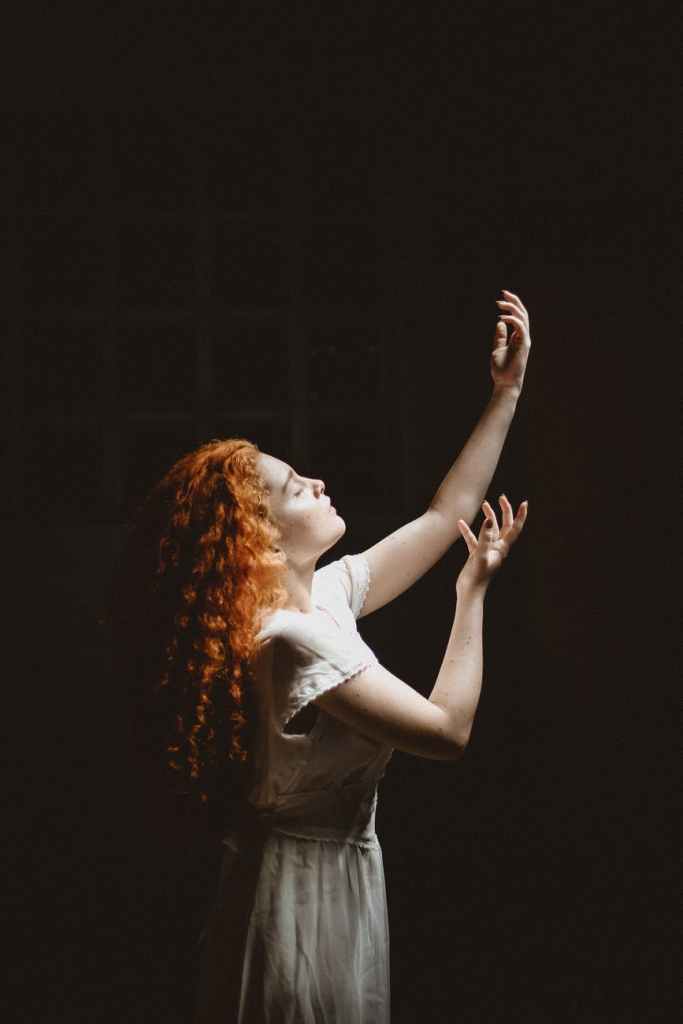
Early Welsh stories assign Arthur three wives, all of whom were called Guinevere
Three separate wives, three indistinct women that later merged into the Guinevere we know. It was not uncommon in Celtic legends for a king to marry the land goddess to cement his claim to power. The land goddess would come in three forms, and the king would be married to all three, thus the three wives for Arthur. Guinevere’s exact origins (at least the mythological side of her character) aren’t clear, as she isn’t tied to any particular goddess we know of. The likelihood of the historical Arthur having three wives named Guinevere is questionable, and historians probably added this bit in to make Arthur seem more important/powerful and connect him to mythology. Whatever the origin of the Guinevere we have, it’s clear that she functioned as the land goddess for the Arthurian mythos. If Arthur lost Guinevere he lost everything. When Mordred married Guinevere in Arthur’s absence, it would have originally been less of a lust-driven act and more of a power move to wrest power from Arthur.
Arthur usually had three sisters, Morgause, Elaine and Morgana
The theme of Maid, Matron, and Crone come into play again with Arthur’s sisters, but age actually has nothing to do with their roles. Elaine is the Maid, she rarely appears in legend and she is relatively obscure to the mythos. She is gentle and doesn’t show any signs of aggression toward Arthur. The Matron is Morgause, she is the mother of a huge chunk of the main Knights of Camelot and identifies her power as much by her son’s worth as her own magical abilities. Morgause is manipulative and cunning, but she isn’t often portrayed as the evil sister. She’s never a pure entity, and often seems bitter toward Arthur, but Morgause is rarely the character trying to actively destroy him. Poor Morgana, the youngest daughter, is the Crone. She is often hard, shriveled and venomous; a cruel enchantress who is always trying to destroy Arthur’s life. Her sudden back-pedal into the vaguely dark, but overall trustworthy character we see later on in legend doesn’t move away from her role as the Crone. Morgana shifts from the vengeful witch to the wise, slow-moving Crone associated with positively aging femininity.
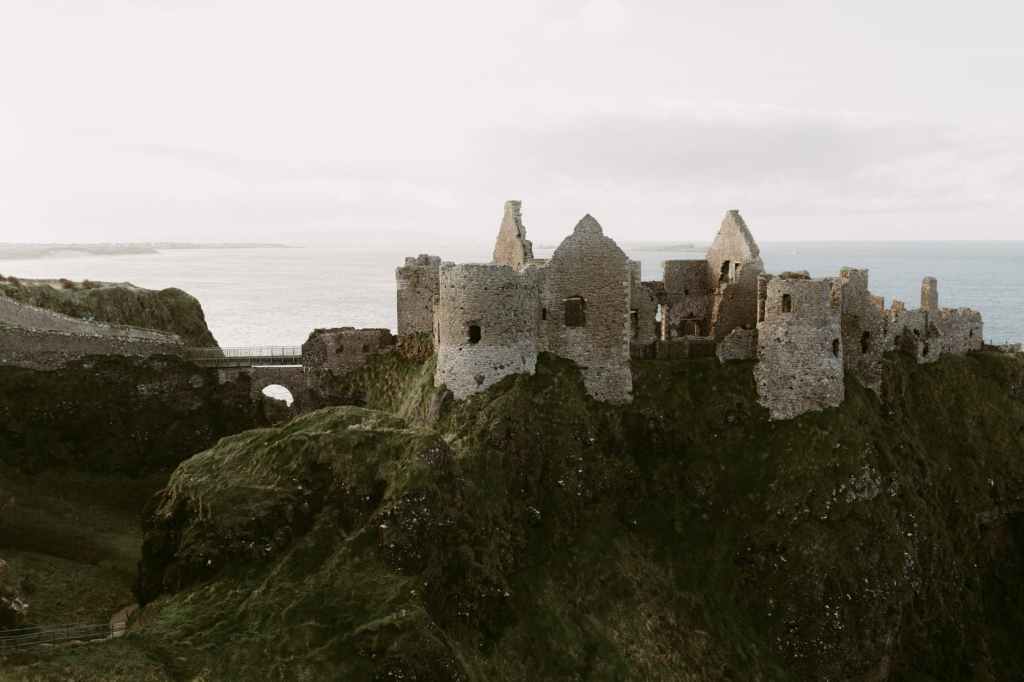

Lady Lyonesse, Lady Lynette, and Lady Laurel are another example of this three-fold feminity
These three ladies were the wives of three of the Orkney Knights, Agravain, Gaheris, and Gareth. Laurel is always married to Agravain, but Lyonesse and Lynette are switched between Gareth and Gaheris. (I prefer Lynette with Gareth and Lyonesse with Gaheris, but I digress) Lyonesse and Lynette are sisters, while Laurel is their niece, the same bloodlines, but different. Just as the trinity goddesses are.
There were also three ladies who went with Bors, Gawain, and another knight on a quest, each of whom BLATANTLY represented the trine goddesses. They were even aged properly! I don’t remember who went with who exactly, since I can’t remember the name of the third knight, but Gawain went with the maiden and I’m pretty sure that Bors went with the crone.
The coven, the three-fold concept of celtic femininity is a constant element in the Arthurian mythos. If there’s a female character, she probably belongs to a trine of some kind, a piece of the ancient concept of the goddess.

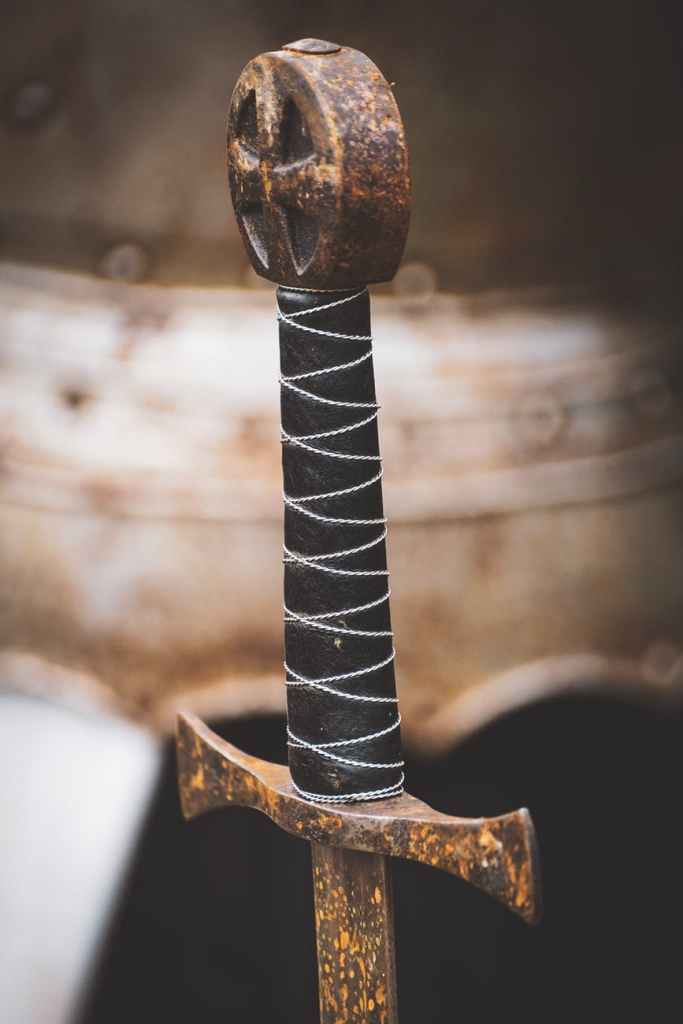
“There shall never man handle this sword…and Launcelot with this sword shall slay the man that in the world he loved best, that shall be Sir Gawaine.”
Le Morte D’Arthur, Sir Thomas Malory
When Gawain was still a fledgling knight and Lancelot hadn’t even entered the picture, Merlin delivered this dire prophecy about their destiny. The purpose of this scene/line was to tell the reader that Lancelot thought Gawain was really great, and so Malory could get away with never explaining why Lancelot liked Gawain so much in the first place.
Why DID Lancelot have a thing for Gawain? And why did Gawain hang around Lancelot?
Lancelot began life as a tiny French add-in to the Arthurian legends that had already existed for about 8 centuries. He was only the fourth (or so) strongest among the knights of Camelot, so he obviously admired the #1 champion of the Round Table. Namely Gawain.
Other than the the admiration Lancelot held for the older, better knight, and the kindness Gawain showed to the newcomer, they didn’t have any relationship whatsoever.
As the centuries took their toll and both Gawain and Lancelot changed, their interactions changed.
They began interacting as equals, and when Lancelot emerged as the top dog of Camelot, the frenemy relationship we know and love was born.
None of this tells us why Lancelot likes Gawain though. If anything, he should hate the old #1 for not retiring and leaving the spotlight all together. Why wouldn’t he give his attention to Arthur, the king and friend he swore fealty to, instead of the random Scottish nephew?
Returning to Merlin’s quote from Le Morte D’Arthur, Lancelot and Gawain are intrinsically linked in a tragic fate. We know that both knights are immensely powerful, and both are driven by fierce loyalty and love. The giant slash in their similarities is that their loyalty and love are to very different things.
Lancelot is famous as the knight who was loyal to love. He loved Arthur in his own way and was loyal up to a point. When Guinevere entered the picture and Lancelot fell in love, his loyalties changed. He loved Guinevere to the point of blindness, even growing to hate himself for the shamefulness of what he was doing behind his king’s back. Nonetheless, he never faltered in what has become his core character trait. Lancelot was loyal to Eros, to erotic, romantic love.
Gawain, on the other hand, was intensely attached to his family. He rose to fight more over insults to his family than for any other reason during his long career. He never faltered in his loyalty to Arthur, his Uncle, while he wasn’t blind to the faults of his brothers (he often called them out on failings) he would give his all to protect them when the occasion arose. Gawain was loyal to Storge, familial love and long standing affection.
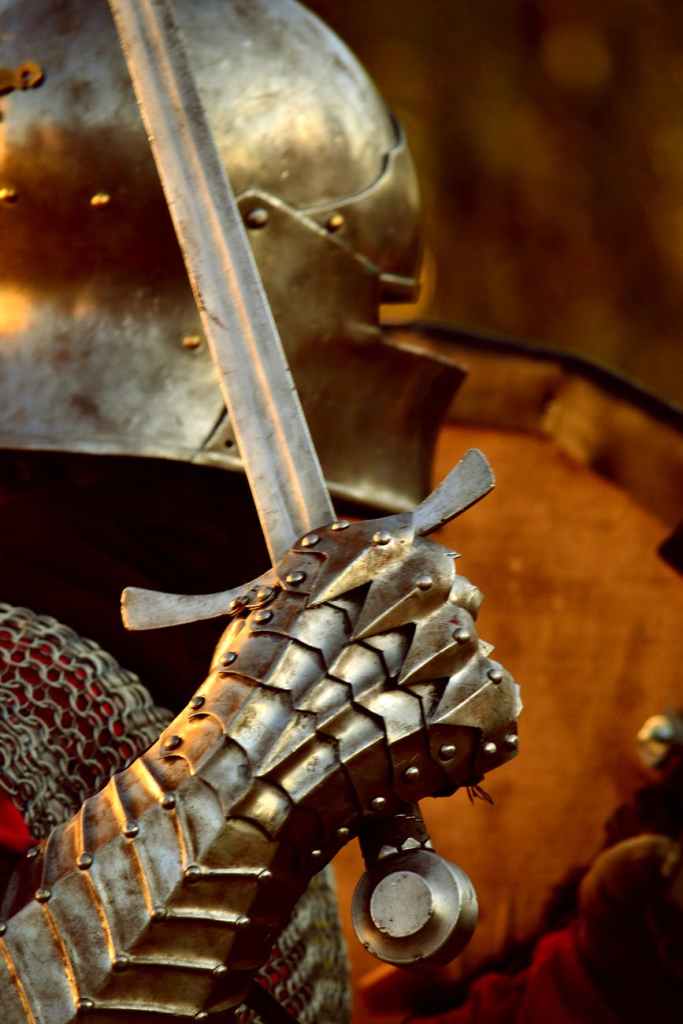
Lancelot’s admiration for Gawain stemmed just as much from his own self-hatred as it did from actual affection. He saw in Gawain(and in the purity of love the other knight valued) everything that he wanted. Lancelot wanted to have Guinevere in the right way, to marry her and have a proper relationship with her. Gawain never had much success in romance (his wives always disappeared after a few years) but what he had was good. He could talk about his love anywhere, without being afraid of it being judged. Lancelot could never speak of Guinevere, it was steeped in treachery and corrupted in comparison.
Lancelot and Gawain both made horrible mistakes because of their loyalties that ultimately caused the downfall of Camelot.

Lancelot valued his love for Guinevere above the lives of the people that would suffer when Camelot fell. He killed people that had fought by his side and welcomed him into their fold. Lancelot didn’t hestitate to kill even Gareth, who had done nothing but admire and adore him. (Malory claims this is because Lancelot didn’t recognize Gareth, but Gareth wasn’t wearing armor, it would have been obvious who he was) He spends the rest of his life grieving over what his addiction to Eros caused him do.
Gawain, in comparison, lost his mind when Storge was wounded. He didn’t kick up a fuss when Lancelot killed Agravain and his three sons because he viewed it as an honorable fight of life or death. Lancelot was in a kill or be killed situation that he had warned both Agravain and his sons to stay out of. He mourned for his children and brother, but he put it aside as a necessary evil. Plus, he probably thought he’d never have to deal with Lancelot ever again after the french knight fled
When Lancelot straight up murdered the majority of Gawain’s family though, that was a different story. Gawain went into shock (Malory states that he “swooned”) and urged Arthur to attack in retaliation.
The rest is history. Gawain died for Storge, but on his death bed, realized he was wrog and sent an letter to Lancelot.
By the time the letter reached Lancelot, the prophecy was fulfilled. Lancelot had killed the man he loved best and was left to wallow in grief and guilt for the remainder of his life.
I’m not ABOUT to get involved in the debate over whether Lancelot’s love for Gawain was platonic or romantic, (to be fair, Lancelot’s bi-sexuality is almost canon, and so is Gawain’s). All I have to say on the matter is that regardless of what type of love Lancelot had for Gawain, it was a powerful thing that has shaped their characterizations since Malory first wrote Merlin’s prophecy.
The tragedy of how Sir Lancelot loved Sir Gawain, and how it destroyed them both.
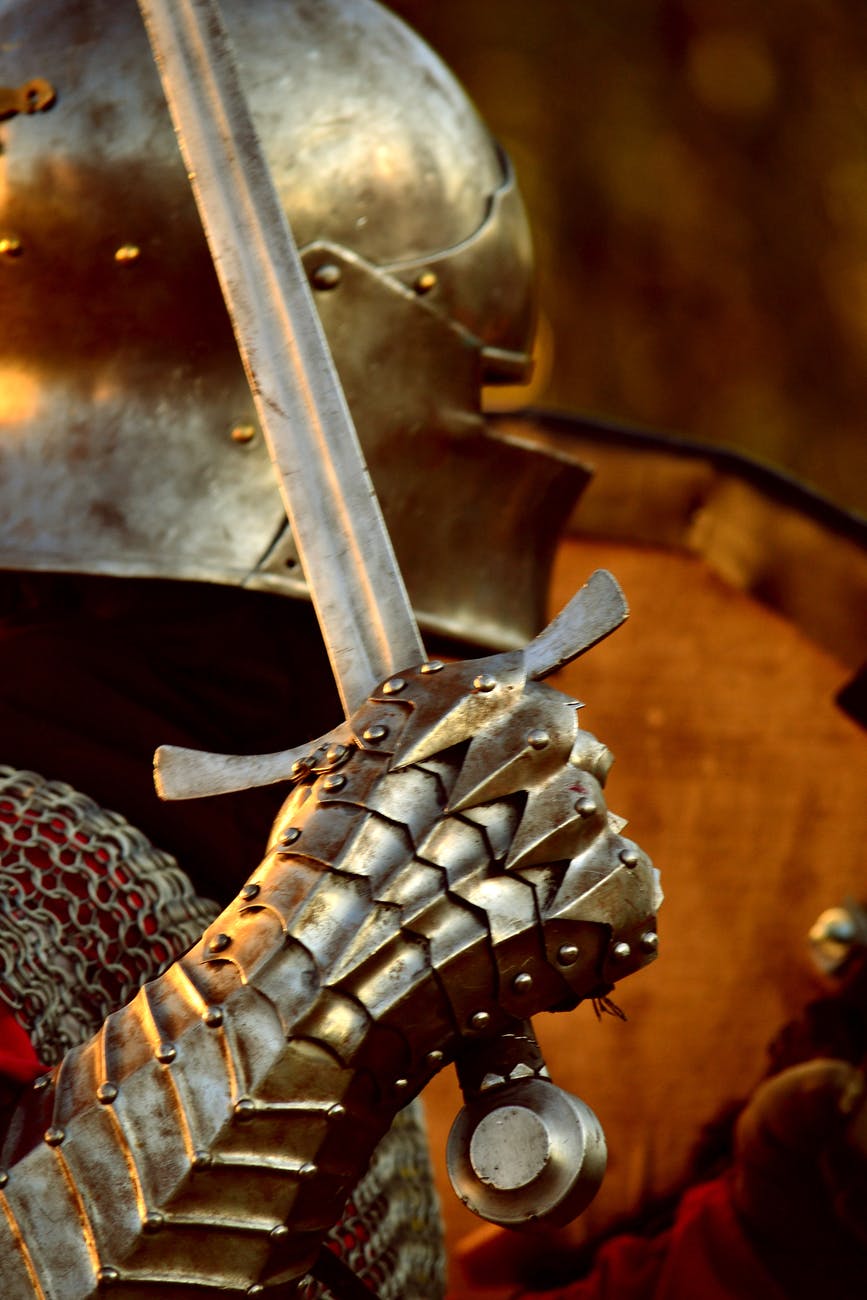
Lancelot is the pinnacle of knight-hood, being a shining example of chivalry, strength and honor. In the process of making him so perfect, various writers accidentally gave him some interesting or just plain BAD traits in the process. What is the point of Lancelot to the Arthurian legend? Why is he so important and why does his character continue to fascinate us? Let’s take a look at why Lancelot, the newbie Mary-Sue to Camelot, is still so popular and likeable.
Lancelot is a walking contradiction, being one of Arthur’s most loyal knights while simultaneously sleeping with his wife. He is very invested in the idea of chivalry, while also decapitating everyone he runs into with impunity. He is insanely strong and seen as being almost unbeatable, while also being the guy who got drugged into having sex with a random chica (sometimes twice)to make Galahad.
The reason for his contradiction is actually different from a lot of Camelot’s knights.
For most of the Arthuriana cast, their bi-polar tendencies stem from the fact that most of them had sprung up before the seventh century. Oral story-telling being what it is and different cultures putting their own unique spin on things is where the discrepancies happen. Lancelot, despite being an old character by most standards, has a different set of problems from the rest of the core cast.
Lancelot is usually written to be the paragon of whatever ideals are popular at the time of the re-write. When film became a thing, Lancelot is always cast as whatever the ultimate male aesthetic was at the time. That is why Lancelot is NEVER consistent in his appearances.
Is a blank, overly masculine brick of testosterone the ideal man of the age? Boom!
Are men supposed to be more in touch with their sensitivity and start crying at the first inconvenience? Wham!
Lancelot’s personality is altered to fit whatever is popular for the era, and this has been happening since his conception. When he was first written, Courtly Love was becoming a thing, so it wasn’t long before he was slapped on Guinevere so the stories would have something to keep the modern audience interested.
Essentially Lancelot is the joker of the deck. His job is to help keep Camelot hip and modern with the young people.
One of the earliest versions of how Lancelot met Arthur (no I do not remember where I read this so don’t ask) involves him offering to duel a half-giant knight for the fallen king since the half-giant had flipped Arthur’s war-horse on top of his legs. (Arthur’s legs were surprisingly not broken and the half-giant unsurprisingly insisted on dueling him to the death despite Arthur being physically unable to). As strange as it is to us modern readers, Lancelot actually lost to the half-giant, but insisted that he would defend Arthur. The half-giant thought Lancelot was pretty sexy and said he would exchange Arthur’s life for a one-night stand with the foxy frenchie. In a strange turn for the bi-sexual, Lancelot said sure and the two skipped off, with Arthur promising to make Lancelot a knight once he recovered. This story was trashed by later generations that didn’t like homosexual encounters of any kind, and couldn’t stand the idea of Lancelot EVER losing to anybody(coughMalorycough) . This is also why Percival’s duel with Lancelot, where he destroyed Lancelot armed only with random kitchen supplies, a dumb smile and a cheese-board, (it’s hilarious) is rarely mentioned in post-Malory adaptations.
That said, if he is to be a good ‘Lancelot’ he needs a few character traits that are sometimes overlooked.
Lancelot MUST be stupid strong and very gifted in combat.
He MUST be loyal to Arthur and feel bad about betraying him.
It’s PREFERABLE for him to have at least one major identity crisis involving Galahad or his role as the perfect knight. He is Mr. I’m-Too-Cool-For-This but dressed convincingly in drag to fight Sir Dinadan over an insult to his friend.
Lancelot is a tragic example of a good small-time character that was clipped, stitched, and re-painted to fit the role of lead male. The poor guy is one of the most angst-ridden and depressed characters in western literature at this point.
I always have mixed feelings about Lancelot. His inability to keep it in his pantaloons is half of the reason why Camelot fell. And his arrogant berserker fighting style killed off an entire family when he systematically (though accidentally) murdered the Orkney Knights. However, this same character is the one who rushes like a mad-man across Europe to get to Arthur in his hour of need.
He is the same character that has to stand on the bloody fields of Camlainn and know that everything is over.
Lancelot lives out the remainder of his life as a monk, rejected by the woman he loves and forced to carry the knowledge that he caused the deaths of the people he loved most. If that’s not heartbreaking I don’t know what is.
Lancelot is a sad character that we all love to hate and hate to love. We hate him because he was weak, and we love him because we can see a bit of ourselves in his failings.
He is a man walking amongst gods, and because of that, he makes Arthuriana ever more interesting and colorful.

Here we go! A quick look at how the different types of love defined Camelot.
There’s an overview of how each type of love effects the legends and then a brief blurb about some of the characters that seem to display it the most.
Storge: Familial love and natural affection
Storge held Camelot together for years, but over time, it became less of the glue between houses/factions and more the vice choking the life from Arthur’s Kingdom
Storge is mainly exemplified by Gawain, he loved his family more than he loved himself. Arthur and Kay are another good example. They are VERY different people but still loved each other dearly.
Philia: Love for Friends
Philia is betrayed and destroyed over and over again in Camelot. It is strong when the kingdom is young, but as Logres ages, Philia becomes fragile.
Most of the round table fell under this category. The relationship between the knights fell under Philia when they weren’t violently opposed to each other. Some examples are: Gawain and Lancelot, Arthur and Lancelot, Tristan and Dinadan, etc.
Eros: Erotic, romantic love
Eros is dangerous in Arthuriana . It destroys Arthur and razes everything he held dear. The strongest players in the Arthurian mythos are ultimately brought low by improperly handled Eros.
Tristan and Isolde, Guinevere and Lancelot, the most turbulent and exciting romances Arthurian Legend has to offer are undeniably the products of Eros. The love Merlin had for Nimue also falls under this category
Agape: Unconditional love
Agape is lacking in the Arthurian mythos. Most events that would be assigned to Agape were driven as much by Storge or Eros as unconditional love.
Percival loved everyone, he was the original good boy. Galahad tried hard to embody Agape as well, but there was always something bitter at the core of his characterization that always makes him fall short of true Agape.
Ludus: Playful, flirtatious love
Ludus drains out of the legends as the story draws closer to the destruction of Camelot, its loss darkens the atmosphere and lends an air of seriousness to the stories
Ludus is hard to pin down without leaning heavily on specific incarnations of the knights. Gareth could be portrayed as almost flirtatious, but not quite. Bedivere is another candidate, but his characterization is hard to pin down. The relationship Gawain experienced with Lady and Lord Bertilak can possibly be placed under this category, but it’s up for debate.
Pragma: Long standing love, as with a married couple
The sense of loss we feel from Arthur at the end of the legend, is the loss of Pragma.
Gawain and Ragnelle’s story never gave off Eros fireworks like the other romances of Arthuriana. They were calmer and softer with their affections, which while boring, makes for a sweet romance.
Arthur and Guinevere also gave off more of a Pragma feel, which could have been why Guinevere wound up in a relationship with Lancelot. She might have been looking for excitement that her old romance with Arthur couldn’t give her.
Philautia: Love of self
Philautia had the capacity to save or raze Logres. In the end Philautia was as much a player in Camelot’s ultimate fall as Eros
Morgana, Merlin, Mordred, Mark, (a lot of ‘M’s) are strong contenders for Philautia in the Arthurian mythos. Philautia comes out to play mostly in morally grey/antagonistic characters, but key players such as Lancelot, Guinevere, and Arthur also demonstrate it. Philautia is a double-edged sword, loving yourself can be a good thing just as easily as it can be a bad thing.
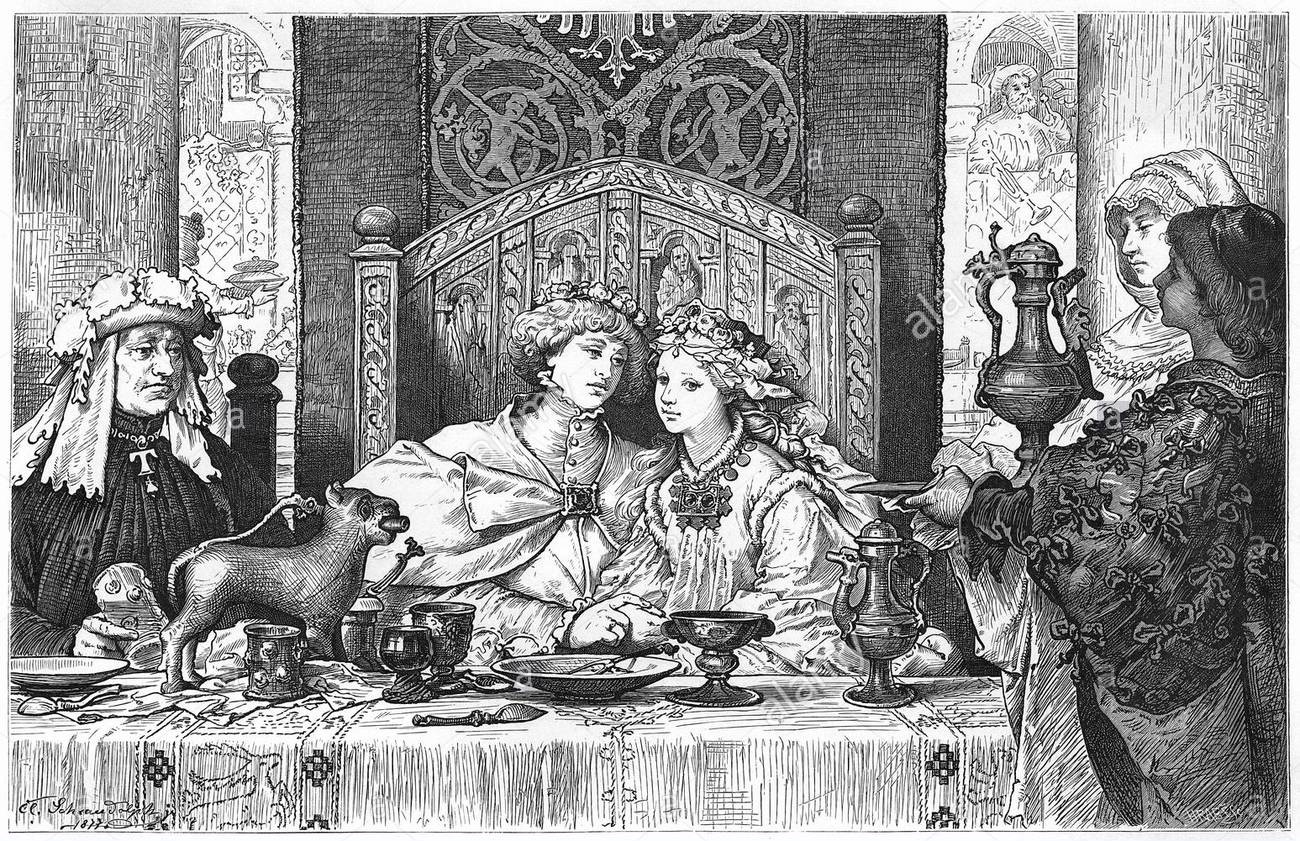
The story of Gorlois and Igraine isn’t one you hear very often. Igraine is the mother of Arthur, but she isn’t named in many versions of the story. Since she’s just a woman, the misogynistic writers of later ages didn’t deem her worthy to talk about. Gorlois is an even rarer mention. Most readers don’t care about Igraine’s first husband since he didn’t have anything to do with Arthur.
So who were Gorlois and Igraine?
Gorlois was the Duke of Cornwall and a very influential member of Uther’s party. Igraine was his beautiful wife, whose lineage conveniently traces back to the pre-Roman kings of Wales.
Igraine is often identified with the ancient Welsh character of Eigr, a daughter of Amlawdd Weledig in Culhwch and Olwen. Igraine’s ancestry in later stories was mentioned as a name-drop to make Arthur’s claim to royalty a little more concrete. After all, Uther was just a conquering war-lord who had no family history of royalty except perhaps a connection to an old romano-celtic family.
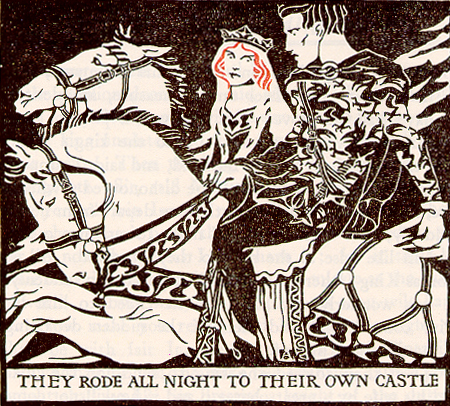
Many stories that deign to mention the existence of Gorlois (beyond affirming that Arthur’s sisters had a father of some sort) portray him as a puny noble with no hope of standing against Uther in the long run. From the ruins of Tintagel, we know that the occupying lord, (presumably Gorlois) during the time of the historical Arthur’s birth was actually very powerful and immensely wealthy. There is evidence of a thriving economy that traded all the way to the Mediterranean in the ruins of Tintagel, indicating that Gorlois was not just a small-time noble that Uther could push around. Gorlois would have been someone that Uther would have had to engage warily.
According to legend, Igraine warned Gorlois that Uther was trying to get frisky after inviting the two to his castle and that she was uncomfortable with it. Gorlois was furious (as any loving man would be) and the two fled Uther’s castle, returning home where Gorlois prepared for the inevitable backlash. To protect Igraine, he sent her to Tintagel presumably with their three daughters. (Some myths also give Gorlois and Igraine a son called Cador who is a very interesting, but minor player in legend)

Tintagel, were Arthur was conceived, is a natural strategic masterpiece. It’s a peninsula sitting atop soaring cliffs and connected to the mainland by a very small path that would have made it easy to defend and almost impossible to effectively siege.
The stories get around this by the handy trump card that is Merlin. Merlin disguised Uther as Gorlois and Uther was able to enter Tintagel and sleep with Igraine (which is a really dirty thing to do to both Igraine and Gorlois, I get mad every time I think about it). Unbeknownst to anybody, Gorlois had died in battle mere hours before Uther-Gorlois arrived in Tintagel. While freaking Igraine out, Uther and Merlin were overjoyed. With no-one to stop him, Uther married Igraine post-haste, and sent her daughters away to be married to political allies almost as soon as he said “I do”
Igraine’s story is steeped with further heartache. First, Uther confesses that the child she conceived the night Gorlois’ death is his. It doesn’t say how Igraine felt about this, other than being relived that she wasn’t impregnated by some demon or spirit in the guise of her husband, but any sane person would have been hurt by this information. Then, when her child is born, Uther fulfills his end of the bargain to Merlin and gives him the baby immediately. Igraine is told that her son was stillborn and doesn’t learn until much later in life that he survived. Some stories assign her an additional child by Uther, a daughter named Anna. However, Anna is essentially Morgause with a different father, so to avoid confusion, I personally leave Anna as Morgause.
Igraine’s character veers on several different directions after Uther’s death. Sometimes she goes to see Arthur shortly after his marriage to Guinevere and the two are reunited. Other times she is living in the Grail Castle or is discovered by Gawain in the Castle of the Maidens.
The reason that I love Gorlois and Igraine’s relationship is a TEENY TINY detail that usually get skipped over.
Igraine is the one who came up with the idea to escape Uther’s stronghold by night and how to leave without being seen…and GORLOIS LISTENS TO HER. In a world were women’s word was so often treated as garbage, Gorlois defers to his wife’s judgement. He trusts her immediately when she says that Uther is making a pass at her. He lets her take the reigns when stealth is required, and does everything in his power to back her up and protect their family. In many versions of the legends, the reason that Morgana is so keyed up about killing Arthur is to enact revenge for her father’s death. Why on EARTH would Morgana still want revenge so long after Gorlois’ death if he wasn’t an absolutely fantastic person?
Gorlois and Igraine are every bit as tragic as Tristan and Isolde, and I think it’s time someone talked about it. Make a mini-series or something!
Maybe my rant will inspire some of my creative readers? Please feel free to contact me if you find anything interesting about these two.

Before anybody gets up in my grill about their character’s spot (or absence from) on the list, please note that this is my own personal interpretation of the legends and I physically CANNOT fit every single knight into this list.
GOLD TIER
SILVER TIER
BRONZE TIER
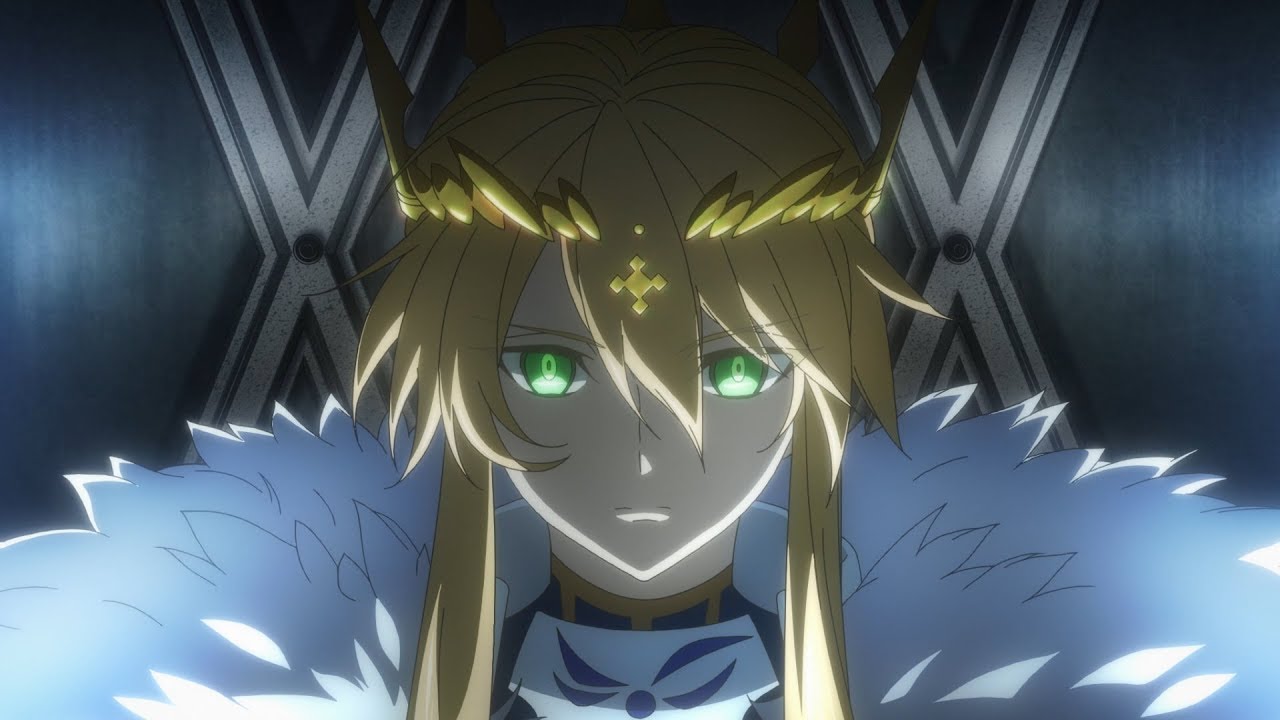
Lots of people know about the anime series called Fate that pulls from global history/myths to make super-powered warriors in a magical battle royalle.
If you’ve ever seen an episode, you know that Type Moon decided to walk on the wild-side when designing Arthur. Arthur became Arturia, and the world of Arthurian legend exploded. That isn’t the end to what Fate played with in Camelot, but today we’re concentrating on Arthur.
Arturia is a fun “What if?” character that seems less like an actual interpretation of the legendary king and more of a new idea that just uses some Arthuriana scraps for flavor. I don’t mind the idea of a female King Arthur, but I don’t care much for Arturia.
Now, before I get crucified over this, let me explain. 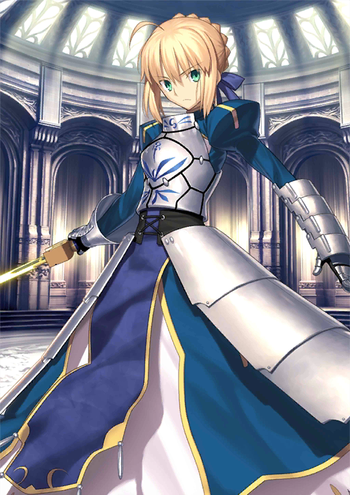
Arturia as a character is fine. She’s a decent, though somewhat flat, female warrior with all the angst you expect from a lady knight. What she is not is a good interpretation of Arthur. According to Fate’s lore, Camelot failed because she could not understand the hearts of her people. This disconnect was apparently caused by Excalibur, which gave her great power AND stripped her of most of her human understanding. That idea isn’t as strange as you would think, since her callousness would have lead to the normal events surrounding Camelot’s fall (i.e. Guinevere’s affair, Mordred’s betrayal etc.).
Where Arturia falls flat is her lack of moxie. She is supposedly one of the greatest kings who ever lived, but she’s always hesitating back and forth between courses of action. While this lets her come across as more feminine, and helps develop her relationship with the protagonists, it seriously undermines her position as King Arthur. I’m not saying she’s not allowed to yearn for a simpler life as a normal woman, but she shouldn’t have been so complacent and easily bowled over. Arturia has all of the physical prowess and backstory to set her up to be an excellent and unique addition to the King Arthur hall-of-fame. Unfortunately, she trips at the finish line and leaves me wondering what could have been if she’d been given a little more work-shopping time.
Of course this isn’t then end of Arturia!
Arturia is far from finished, thank goodness, and she’s still getting lots of new content thanks to additional versions of the Fate anime and the mobile game Fate Grand Order. If you play FGO, you know that there are a whopping 13 different versions of Artoria in the game! Each version showcases a different side of her character and has really helped build her up into a more respectable version of King Arthur. (I for one am a little tired of Arturia being one of the only people who ever seems to get an alt, but I digress)
Arturia’s alts come in a wide variety of flavors, ranging from evil versions that give you a peek into her darker subconscious, to hardened lance-wielding monstrosities that let you see just how BAD Arturia’s disconnect from her emotions might have been. There are younger versions of Arturia to give you a taste of her childhood, etc.
The most intriguing alt that she has is her lone male version. I say that he’s the most intriguing version of her not because he’s a guy, but because he’s the prototype Arthur for the Fate Series.
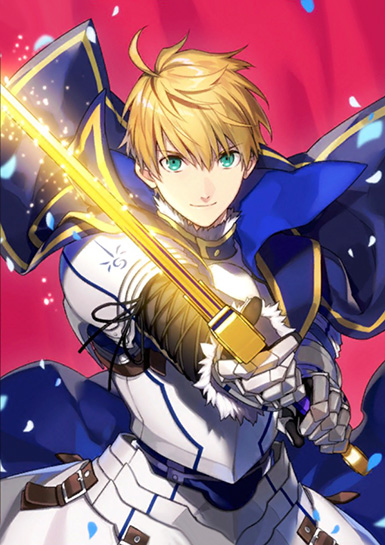
In the preliminaries, Arthur was a pretty boy prince who was pretty predictable and easy to read. As the prototype plot for Fate was fleshed out, Arthur became a pretty interesting character. Despite his goody-goody design and attitude, he was one of the servants who didn’t hesitate to kill his master when the need was great enough. His master was madly in love with him and was determined to fulfill Arthur’s wish of saving England. In the process she killed many innocent people, even going to the point of almost killing her younger sister. Arthur figures out what’s going on and puts an end to it by shoving Excalibur through his master’s chest. Arturia would have NEVER killed Shirou, her master.
Arthur has some pretty nihilistic moments that Arturia never does. Arturia always believes in a greater good, while Arthur seems to have PTSD from Camelot and is questioning whether anything in life even matters.
While Arthur’s problem wasn’t a disconnect with his emotions like Arturia’s was, he was arguably just as hardened as she had been. Male Arthur’s hardening was something he had developed himself, and not something that he could cast off when he died and became a heroic spirit like Arturia.
Since Arturia grew out of Arthur, I think it’s important to look at his story before judging Arturia’s too harshly. Neither of them are perfect, but with the newfound understanding of how ARTHUR effected his female counterpart, lends new light onto the subject. Arturia grew out of the traditional version of knightly values, and made a very important statement regarding the true nature of King Arthur.
I don’t remember where, but at one point, Fate points out that King Arthur will always fail when he’s alone.
WOW! They literally hit the nail on the head with that one! Arturia is allowed to be someone who needs protecting as much as she protects. She is the embodiment of the overlooked aspect of the Arthurian mythos. Arthur is alone when he fails to defend Camelot at Camlainn. It’s the first time he fights alone and the first time he fails to keep Camelot safe.
That said, Arturia and Arthur are essentially the same character with one major difference. Arthur is a man and is expected to break free of his past and push himself forward on his own. Arturia is a girl who is supposed to be saved from her past by the protagonist of her game. It’s the oldest shtick in the book.
In the end, do I think Arturia is a good Arthur?
I think she is a unique eastern view on a western character and a good version. I don’t personally like the version so much, but despite the inherent weaknesses of the character, Arturia is not a bad King Arthur. I find her male version to be much more interesting, but that’s my own opinion.
Please check out this article on the two versions of Fate Arthur if you’re interested!

It’s an interesting fact that most of the characters in Arthuriana wouldn’t have spoken English like we are all lead to believe. The rightful King of England not speaking English? Get out of here!
As it turns out, Arthur’s English would have been almost unintelligible to modern speakers. Old English was guttural, rolling, and sounded something more like Swedish or Danish than the language we have now. The epic Beowulf was written in Old English, so Arthur, Kay, and all the other British knights, would have spoken something that looked more like this pronunciation nightmare:
Hwæt. We Gardena in geardagum,
-Beowulf
þeodcyninga, þrym gefrunon,
hu ða æþelingas ellen fremedon.
Guinevere was a Welsh Princess, so she would have been speaking Old (or even archaiac) Welsh. Welsh split off from the other Britannic languages around the 6th century, so Guinevere’s language is a little up for grabs. The great thing is that people in this time-frame were almost polyglots, so she could probably communicate with her husband just fine. Arthur could probably speak Welsh as well since the two languages existed side-by-side (geographically) since forever.
Eiri mynyd guynt am bert
-Eiri Mynyd
Cans creaudur nem am nert
Ai cyscy a una Gurnert
Another language that would have been floating around Camelot was a language called “Norn”. Norn is a dead language that was spoken in Orkney and Shetland until around 1850, and was a sister/daughter language to Old Norse. It was similar in sound (we think) to Faroese, which is spoken almost exclusively in the Faroe Islands. Faroese is a sweet sounding version of the nordic languages and honestly sounds a lot like Icelandic to me. The modern Orkney accent is noted to have a fun lilting quality to it that makes the residents sound like they’re almost (emphasis on the almost) singing when they speak. I assume that this strange lilt comes from the history of Norn, but you’re free to make of that information what you will. What’s important to note, is that all of the knights from Orkney, (Gawain, Agravain, Gaheris, Gareth, and Mordred) would have spoken Norn.
Favor i ir i chimrie, Helleur ir i nam thite,gilla cosdum thite cumma, veya thine mota vara gorto yurn sinna gort i chimrie, ga vus da on da dalight brow voraFirgive vus sinna vora sin vee Firgive sindara mutha vus,lyv vus ye i tumtation, min delivera vus fro olt ilt.
Amen.
-The Lord’s Prayer in Orcadian Norn
Sir Tristan would have spoken something akin to Cornish, a language that died in the 18th century, but revived in the 1900s. Cornish is another flowing language that looks like the love-child between Welsh and Old English. It has a growing number of speakers and can be learned if you are interested.
En dalleth Deu grwes an neue ha an aor.
-Genesis 1:1
Lancelot would have spoken old French or possibly Norman. Old French’s exact pronunciation is up for debate, but from what I’ve learned, it sounds more like Castilian Spanish than what I expected. It looks a lot like the French we have today, partially because it’s a lot younger than most of the other languages in Camelot. Old French was only a few hundred years old by the time Lancelot came about, so the language is significantly more refined and modern sounding than the other languages I’ve talked about.
Je ne sais par où je commence, Tant ai de matière abondance, Pour parler de ma pauvreté.
-Rutebeuf to Saint Louis
In addition to these languages, most of the noble class could also speak Latin and possibly even Greek or Hebrew. It was considered a sign of good breeding to be well-versed in classical languages for centuries after the fall of the Roman empire. It also just made sense to figure out a single language for business and political transactions.
So while Arthur is muttering to Kay in Old English, Guinevere was running the household in Old Wesh and fending off Lancelot’s French poetry. Meanwhile, Tristan is yelling obscenities in Cornish while Agravain responds just as colorfully in Norn. All the while, an army of side-characters are chatting loudly in God knows how many other languages.
Nobody can even hear the sound of Merlin sobbing “You all speak Latin” in the background.
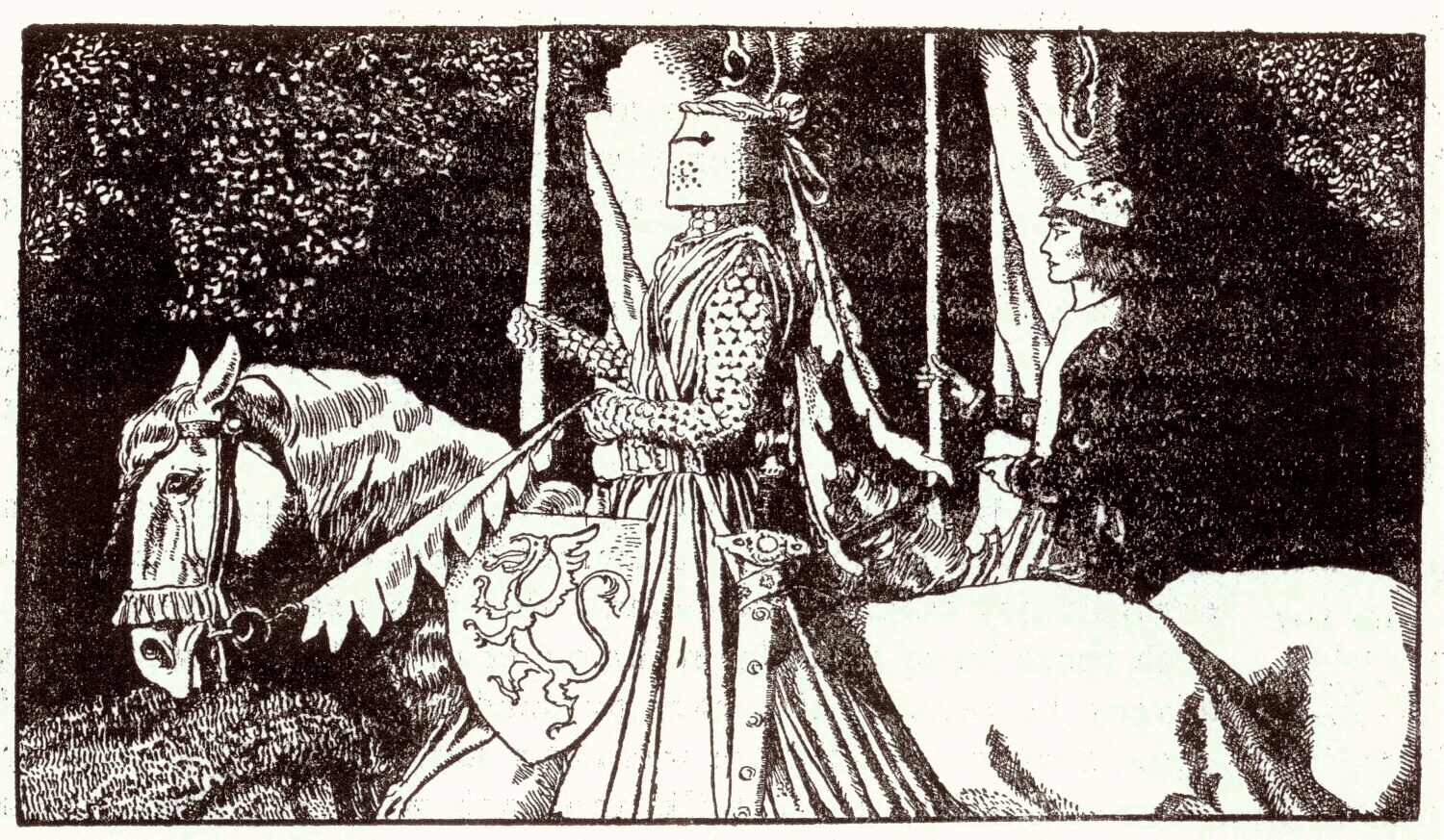
Our sun god turned mortal, our dashing feminist paragon turned asshole, let’s talk about the nephew of King Arthur, Sir Gawain of Orkney, and what went wrong.
Sir Gawain is one of the oldest characters in the Arthurian Universe. He began life as Gwalchmai a mysterious hero who was only a hop-skip-and-a-jump away from being a god. He, along with Sir Kay, were the main muscle behind Arthur’s early escapades. But just like Kay, something went terribly wrong in the later centuries.
When Christianity entered the picture, the god became mortal and Gwalchmai became the man we know as Sir Gawain. His solar-based strength was explained away as the blessing of a holy man and he resumed work as Arthur’s right-hand man.
Other than one major boo-boo involving accidental maiden decapitation, Gawain had a pretty good career.
Following the accidental decapitation, Gawain became the maiden’s knight in penance, swearing to aid any maiden who should ask for his help. (This got a little awkward during jousts when he was de-horsing random knight #49 for a lady, only to have random knight #49’s damsel demand he help her as well) Gawain was an all-around nice guy who tried to keep the peace and help Arthur as best he could.
In one legend he married a woman so ugly(her personality matched her looks btw) she made everyone sick by looking at her. In return she gave him the key to saving Arthur’s life. That legend also teaches the importance of respecting women, because the ugly chick turns out to be the most beautiful woman in the Britain, but can only stay that way during either the day or the night. When she tells her new husband to chose when she’ll be ugly, Gawain gallantly leaves the decision up to her, telling her that it’s her life to deal with as she sees fit. This graceful response breaks the spell and Gawain is left with a wife who’s gorgeous 24/7. (score one for Gawain!)
The poem Sir Gawain and the Green Knight deals with just how awesomely awkward Gawain is.
Gawain is loyal to a fault and honest (almost) till death, in this story. His one fault is that he doesn’t follow the rules of the game his host is playing with him and doesn’t return a magical sash that will save his life in the beheading appointment with the Green Knight the next day. Gawain still lives, but he receives a slight nick on his neck for not returning the sash. The Green Knight himself tells Gawain that it wasn’t a bad thing, and that he isn’t lesser for having wanted to live. Gawain is too guilty to hear it, and returns home convinced he is a horrible person.
What is there to go wrong with this character? He was created to be Arthur’s humble best knight and cool-headed right-hand man, so what happened?
In the 13th century, a pretty face called Lancelot came into the picture. To start with, Gawain is a gracious older knight who Lancelot acknowledges as stronger. The story rolls around as usual for some time, until a certain Lancelot-fanboy came into the scene. Sir Thomas Mallory had a thing for Lancelot and decided it was his mission in life to kick every other character to the curb. In order for Lancelot to supplant the rest of the male cast, he had to start by being the best knight.
In short, for Lancelot to be the best, Gawain had to go.
Mallory is where we really see the change in Sir Gawain’s character. Gawain becomes an angry, boorish, boastful, and almost vulgar character that you want out of the scene as soon as possible. What a change! We go from Gwalchmai the golden-tongued (that’s right, he was so smooth silver-tongue wouldn’t do) to this insane Scottish brute nobody can handle for more than ten seconds. I like Lancelot, but give Gawain a break!
Since Gawain is just a character and not the incarnation of kingship like Arthur, he had a hard time bouncing back from the rough treatment. After Mallory, he was drop-kicked him into a vicious spiral of deterioration from incarnation to incarnation. Gawain hit rock bottom in Monty Python and the Holy Grail where he’s mentioned as one of the knights to have died to the infamous rabbit.
Life’s turned around some for our poor Orkney lad, now he’s receiving some tender treatment from the new generation of Arthurian creators. He has become the symbol of muscle-headed power, but sometimes he’s a good muscle-headed power. Gawain is far from being a god, but his character is slowly being put through post-medieval rehab.
So what happened to Gawain? Gawain shares the sad fate as many cannon characters when a fanfiction OC is inserted to take their place.
Have a WordPress.com account? Log in now.

